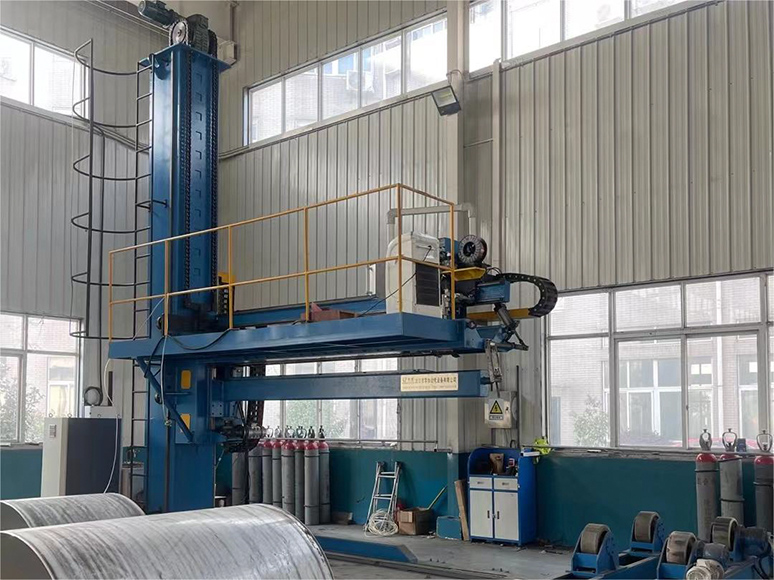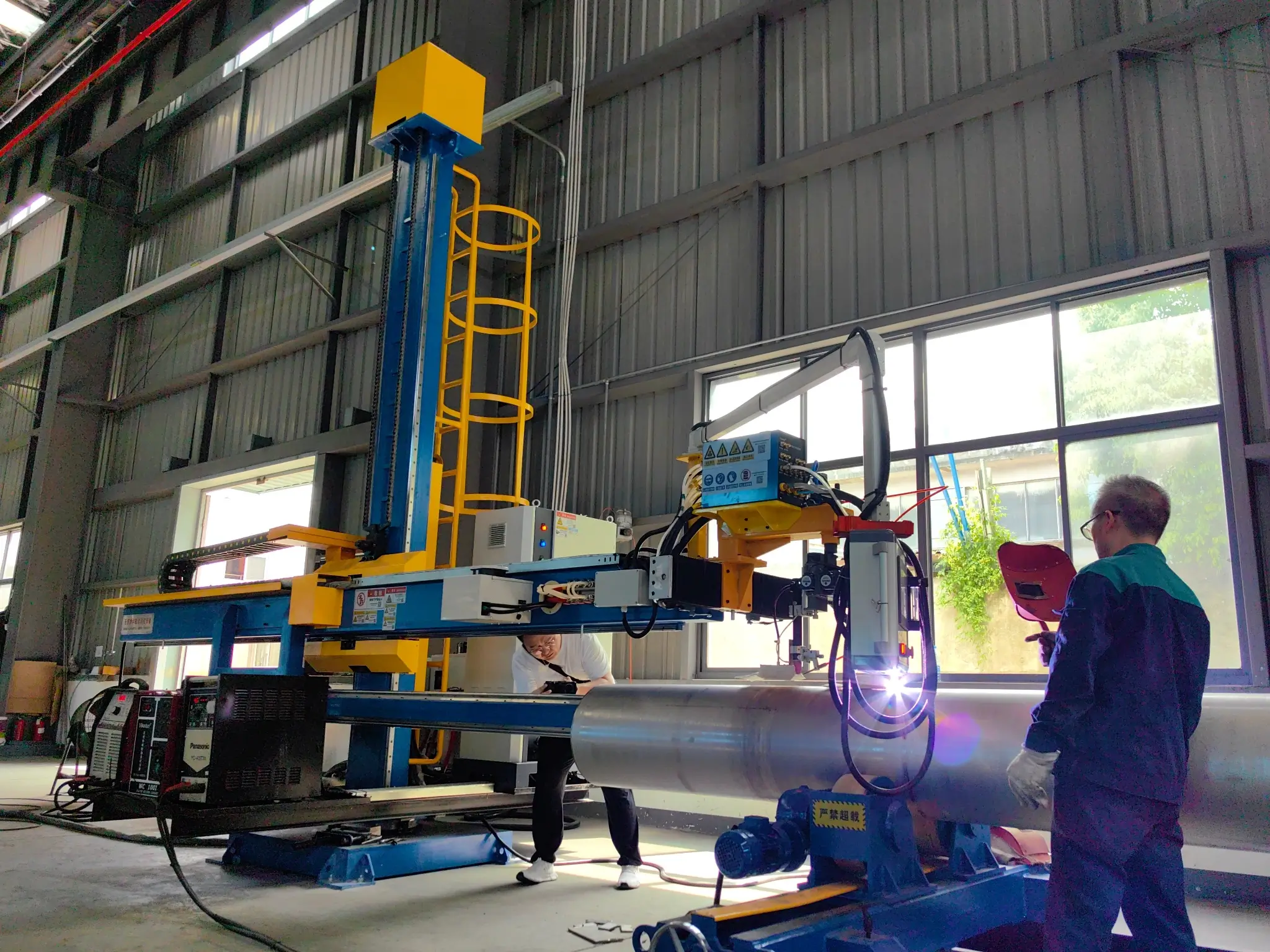
Pipe welding machines are used in various energy transportation industries, such as oil and natural gas, and play a vital role in improving welding efficiency. Our customers rely on these machines to automate welding production, reducing manual errors and ensuring weld quality. We also utilize our proprietary control system, which adapts to on-site conditions and improves production efficiency. However, I believe that choosing between manual and automatic welding methods requires careful consideration. Below, I'll compare the differences between the two methods to provide some insights.
With a welding manipulator, you can improve the efficiency and quality of pipe production. I believe this type of automated equipment is crucial, especially for a process like welding that relies heavily on worker experience.
Different types of manipulators are available to meet the needs of various workpiece sizes, such as column-type and portable manipulators. Column-type manipulators, with their stable mechanical structure, are well-suited for welding medium- to large-sized pipes, while portable manipulators, with their flexibility, are suitable for smaller pipe production.
Pipe prefabrication is a crucial process in manufacturing. Prefabrication of pipe sections in a prefabricated environment reduces assembly complexity and ensures pipe quality.
Prefabrication allows companies to achieve pipe alignment, significantly reducing the potential for leaks. This not only improves efficiency but also reduces on-site installation time and saves at least 30% in costs.
Furthermore, prefabrication facilitates project integration. I believe that as the industry evolves, the adoption of advanced prefabrication methods to enhance the stability of pipe applications will become a mainstream trend.
The difference between manual and automated pipe welding primarily lies in production efficiency and product quality.
It's no secret that manual pipe welding often faces issues like inconsistent quality and slow production speeds, which orbital pipe welding addresses.
As the industry evolves, I believe it's important for everyone to understand these differences, as it's crucial to choosing the welding method that's best for you.
While manual pipe welding still exists in many industries, it will gradually be phased out due to its inconsistent efficiency and quality.
Why does manual welding quality vary so widely? Individual skill significantly impacts the outcome, and manual welding can easily lead to fatigue, compromising safety.
Safety is paramount for any business, and manual welding must be mindful of hazards such as burns, fumes, and radiation.
I also understand that achieving uniform weld penetration requires extensive experience and a thorough understanding of the workpiece material. These factors can affect manual pipe welding results, potentially failing to meet expectations.
I believe orbital pipe welding represents a significant advancement in welding technology, offering improved efficiency and quality compared to traditional manual welding. This automated equipment utilizes a rotating electrode, enabling stable welding with advantages such as high welding speed, high weld quality, and minimal material waste.
| Features | Orbital Auto Welding | Manual Welding |
| Efficiency | High | General |
| Quality | Excellent | Big difference |
| Difficulty | Low | Higher |
| Consistency | Uniform | Inconsistency |
| Application Range | Industrial high precision | Simple tasks |
I believe automated welding will revolutionize the pipe industry. This is made possible by technological advancements that significantly reduce human error. Furthermore, as welding technology continues to evolve, automated systems can ensure consistent quality, which is crucial for high-risk projects.
Automation also simplifies operational processes, shortens production time, reduces costs by over 30%, and improves worker safety. It can also weld a variety of challenging materials and complex structures.
Integrating automated solutions into pipe welding not only improves productivity but also helps companies stay competitive in this fiercely competitive market.
I believe that automation technology will pave the way for the future of the pipe welding industry.